India must question the utility of SCO The Statesman 01 Jul 2025
 Article Read Time
India must question the utility of SCO The Statesman 01 Jul 2025
The SCO’s (Shanghai Cooperation Organization) defence ministers’ summit last week in Beijing ended without issuance of a joint statement. The reason, as mentioned by India, was that Pakistan and China were attempting to divert attention away from terrorism. In case India had inked the statement it would have impacted our strong stance on cross border terrorism as also regional security.
The draft joint statement did not mention Pahalgam but included the ongoing ‘freedom struggle’ in Baluchistan, which was termed as ‘terrorism.’ Evidently China was backing Pakistan, as its own investments in Baluchistan’s gold mines and the CPEC were impacted. Pakistan also wanted to include the Jaffar train hijacking in the statement. In both cases the intent was to link India to the Baloch freedom movement.
India’s refusal displayed that it will not bend on its national interests as also its strategic autonomy. The Indian foreign office mentioned, ‘On our side, India wanted concerns on terrorism reflected in the document, which was not acceptable to one particular country.’ The country was Pakistan, backed by China. Pakistan feared that the statement would make it accountable as a sponsor of terrorism in India.
Rajnath Singh in his address in the meet, mentioned, ‘It is imperative that those who sponsor, nurture and utilize terrorism for their narrow and selfish ends must bear the consequences. Some countries use cross-border terrorism as an instrument of policy and provide shelter to terrorists. There should be no place for such double standards. SCO should not hesitate to criticize such nations.’ While the SCO does not permit individual disputes to be projected in the organization, nations raise issues without naming countries concerned.
What further backed India’s stance was that the chapter on ‘goals and tasks’ in the SCO Charter mentions that SCO nations will ‘jointly combat terrorism, separatism and extremism in all its manifestations.’ Contrary to this, the joint statement avoided mentioning terrorism.
India and Pakistan became full-fledged members of the SCO in 2017. India was inducted on the insistence of Russia, which then sought a counterbalance to China, while Pakistan’s entry was pushed by Beijing, as a challenge to India. It is known that the SCO is China dominated as all its members, less India and to some extent Russia, are beholden to it. Most members of the SCO are also part of China’s BRI (Belt Road Initiative) and hence financially indebted to it.
Any global recognition for the SCO stems from India’s presence. It is the only democratic nation in the organization, the others, Russia, China, Pakistan, Iran, Belarus, Kazakhstan, Tajikistan, Kyrgyzstan and Uzbekistan are either autocracies or quasi-democracies. The SCO is largely anti-western with India being an exception, hence India’s conduct is closely watched.
Non-issuance of a joint statement reflects poorly on the host nation, in this case China, for failing to arrive at a consensus. It also indicates strong divisions within the organization. India worked round the clock, interacting with all participants to ultimately arrive at the New Delhi declaration at the end of the G20 summit in Sept 2023.
The G20 declaration was hailed as a diplomatic success, especially as the summit was conducted in the midst of the Russo-Ukraine war and growing tensions between the US and China. While the declaration was claimed to be low on substance, the fact that it was agreed to by all participants, despite divergent views, was in itself a success.
India appears to be losing interest in the SCO, based on how the institution is moving. Under its presidency in 2023, India conducted almost 134 meetings and events but ultimately held the Heads of State summit in a virtual mode. The announcement to host the same in virtual mode was made about two weeks prior to the summit.
The virtual mode was undertaken to avoid embarrassment to the government as it could have led to PM Modi meeting the Chinese president as also the Pak PM. Galwan was yet to be resolved and ties with Pakistan were anyway rock bottom. Further, India has been the only nation in the organization, which has refused to endorse the Chinese BRI, a fact mentioned in every joint statement issued after a major summit.
Recently, India also distanced itself from the SCO’s official comment after Israel’s military strikes on Iran, an SCO member. The statement criticized Israel for the strikes. The Indian statement, distancing itself from the SCO official communique, mentioned, ‘India’s own position on the matter had been articulated by us on 13 June 2025, and remains the same. We urge that channels of dialogue and diplomacy be utilised to work towards de-escalation.’ It was the only nation in the group to disagree.
For India, China and Pak collusion, as also unsettled borders with both, alongside emanating terrorism from Pak, give it little leeway within the SCO. If the reason for India continuing is a platform to engage with other members, then this is a narrow view. With Central Asian nations, there is the India-Central Asia dialogue and India-Central Asia summit. The last India-Central Asia dialogue involving foreign ministers was held in early Jun in New Delhi, while the summit in 2022.
India-Russia summit of leaders is annual event. President Putin is expected to travel to India sometime this year. The visit of the Russian foreign minister, Sergei Lavrov, to coordinate dates for this year’s India-Russia summit was postponed due to PM Modi’s visit to the G7. India-Iran ties are anyway robust with regular conversations at all levels.
India and China are also competing with each other for the leadership of the Global South. The LAC remains unresolved and tensions remain. China, desperate to stem India’s growth, has been placing curbs on key exports, the latest being export of Urea to India. It had earlier blocked export of rare earth minerals and two tunnel boring machines for the Mumbai-Ahmedabad bullet train project, built in China by a German firm, for which payment had been made.
In a scenario where the organization offers little, the government needs to consider whether its membership is in anyway beneficial. If not, then India should withdraw. As a first sign PM Modi must signal his unhappiness with the direction the SCO is taking by not attending the Heads of State summit in Tianjin, China, later this year.
About the Author

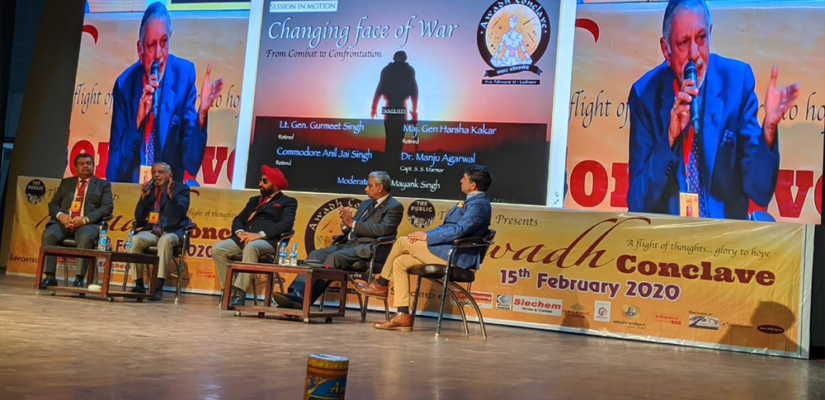
Maj Gen Harsha Kakkar
Retired Major General Indian Army