India Nears Deadline to End Naxalism, But the Real Test Begins Now Times Now 31 Mar 2026
 Article Read Time
India Nears Deadline to End Naxalism, But the Real Test Begins Now Times Now 31 Mar 2026
The nation has been consumed by rumours of shortages of fuel and gas post the US-Israel air assaults on Iran that attention on a major change within the nation has gone unnoticed. For the past more than a year the government has been stating that Left Wing Extremism (LWE) or Naxalism led by the Maoists will be ended by 31 Mar. The Ministry of Home Affairs (MHA) year-end review issued on 31st Dec 2025 mentioned, ‘Under the vision of the Modi government to build a Naxalism-free India, the MHA has upped the ante to completely eradicate the menace of LWE by March 31, 2026.’ This is coming true.
There have been a series of surrenders close to the deadline. These include major Naxal leaders including Papa Rao and Sukru, both of whom carried major bounties on their heads. They had been operating for decades and appeared out of reach of security forces. Others are also likely to surrender prior to 31st March. As per inputs over 350 Maoists were neutralised and thousands surrendered in 2025, apart from almost a thousand being arrested, post a series of intelligence-based operations.
Reasons for ending of the LWE movement are many. Some of the surrendered Maoists claim that their ideology is no longer effective and would prefer working under the constitution. There is also the impact on morale with offers of surrender and rehabilitation as also ill-treatment by senior cadre members. Pressure by relentless and successful operations by security forces has also impacted their morale.
There are reports that security forces have launched final assaults on the few remaining Naxal positions in the different parts of the country to force surrenders. These operations are being coordinated centrally to ensure the Maoists do not shift from one state to the other. Currently only about 130-150 Naxals remain led by two central committee members of the CPI (Maoist) group. The aim is to end LWE before the due date.
From an earlier around 180 districts impacted by LWE the balance is now seven and even here the presence is minimal. The movement which began in Naxalbari in West Bengal in 1967 has claimed over 17,000 lives including that of civilians and security forces. It was in 2010 termed as the ‘single biggest security challenge.’ The so-called Red Corridor, controlled by the Naxals and declared as ‘liberated territory’ stretched from Pashupati in Nepal to Tirupathi in Andhra Pradesh.
This success would not have come about without the government working on a plan with set objectives. The government adopted a multi-pronged strategy including security operations being coordinated between states, developmental initiatives and sound governance. The government encouraged surrenders and ensured that incentives offered are adhered to. Apart from a surrender package and monthly stipend, it is also offering skill and technical training through multiple Industrial Training Institutes and Skill development Centres opened across the region.
Apart from constructing roads, opening mobile towers, banks and ATMS to build confidence and enhance inclusiveness in remote regions, it also launched the Aspirational Districts Programme in 2018. This was aimed at ‘transforming underdeveloped districts through targeted interventions in health, education, agriculture, financial inclusion, and skill development.’ It won hearts and minds amongst the tribals with many preferring surrenders.
To enhance success in security operations the government inducted technology in a big way. Monitoring mobile and social media communication alongside use of drones and satellites enabled pinpointing locations of Maoist camps deep within jungles. These were then targeted by coordinated operations ensuring success. There were setbacks in the form of ambushes but troops never lost heart. The forces regrouped and re-launched operations. The Central Armed Police Forces have been leading the operations alongside specially trained and equipped state police forces. They have made immense sacrifices to ensure elimination of the Maoist menace.
The creation of District Reserve Guards, which had 40% local tribals and surrendered Maoists was a master-stroke. They knew the area and language and led operations successfully in most dangerous districts. To prevent Naxals from exploiting inter-state boundaries, operations between states were coordinated. Finally, the bringing in of NIA into the picture was a game changer. The NIA through detailed investigation blocked the flow of funds for the movement, limiting their ability to recruit new cadre as also purchase weapons. Ultimately success flowed.
The turning point was the successful Operation Black Forest in Narayanpur in May last year. It led to the elimination of 27 Naxals including Basavaraju, who was General Secretary of the CPI (Maoists) and the backbone of the movement. The operation also resulted in 54 arrests and over 80 surrenders. The Maoists never recovered from this loss. The word spread and surrenders became the norm.
What the government has achieved is the start. If the future is not handled with care, compassion and understanding, there can always be a reversal. For this, monitoring by the centre, cooperation by states and good governance is essential. The surrendered Naxals must not be mistreated but considered as misguided individuals and merged into the mainstream. Democratic processes must be implemented in reclaimed regions by holding Panchayat polls. Narratives on the benefits of ending the movement and joining the mainstream must be played up.
As has happened before, the government declared some districts terrorist free in J and K and the North East, only for terrorists to return, forcing the government to step back. This should not happen here. The government has achieved partial success, maintaining it and building up on it is harder. Laxity based on success achieved must not set in. Development implemented thus far must be pushed further. This is not the time to rest on laurels but move forward.
About the Author

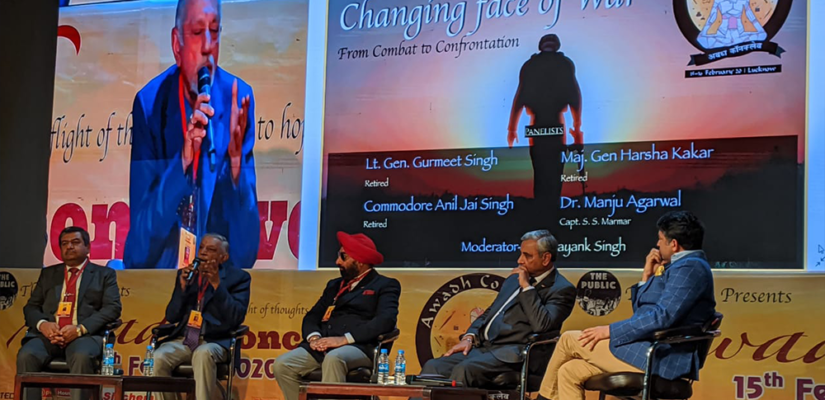
Maj Gen Harsha Kakkar
Retired Major General Indian Army